
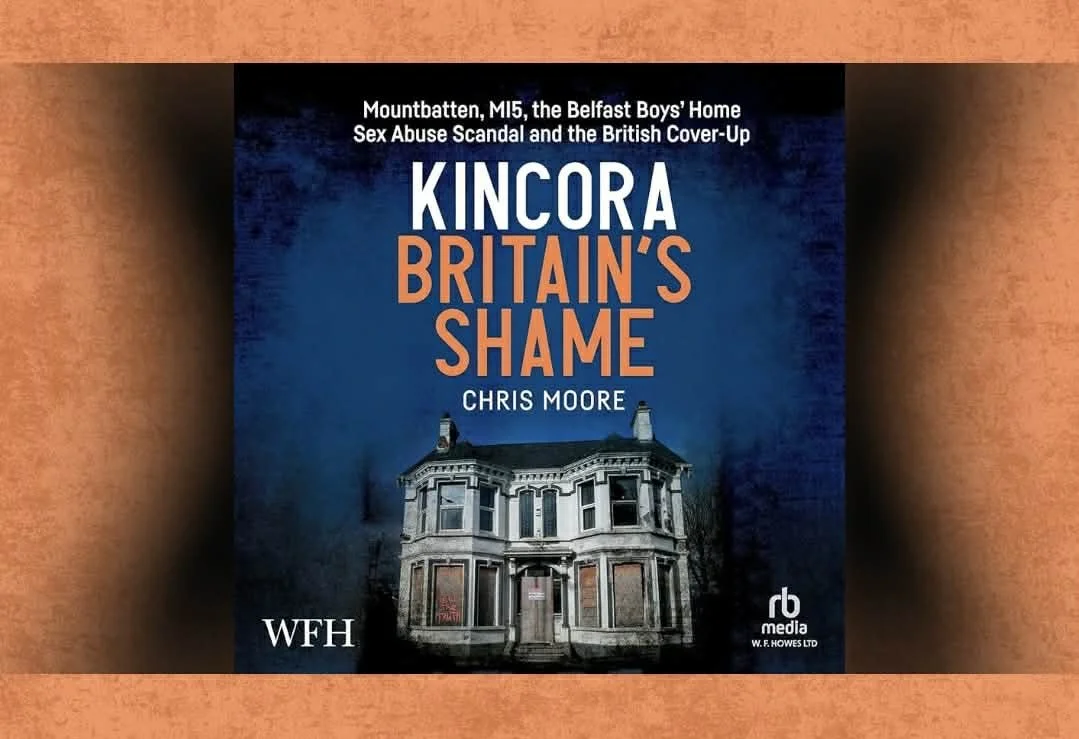
Book Review - 'Kincora: Britain’s Shame: Mountbatten, MI5, The Belfast Boys’ Home Sex Abuse Scandal And The British Cover-Up'
Chris Moore pulls no punches in this book, which contains coverage of the most horrific abuse. But it is the location of the Kincora scandal during the so-called Troubles which elevates this book into one of the more important books about that period of time in the Six Counties.
There are passages in the book which are disturbing and make for difficult reading. One aspect of the case, which may come as a shock even to those already aware of the scandal, is that boys from Kincora Boys’ Home in Belfast were regularly trafficked across British imposed border to Sligo and over to England. Sligo was where ‘Lord’ Louis Mountbatten holidayed every summer.
Although Mountbatten is the most prominent abuser named in the book, he is far from being the only one.
Chris Moore, the investigative journalist who covered the case from its becoming public in 1980 to the present day, takes a wider look at, not just the people involved in the abuse, but their protectors in British intelligence service MI5 as well. Why did MI5 cover up what went on in that house of horrors?
We meet Mountbatten right at the very start of the book, and it is his involvement with Kincora which suggests an obvious reason for the MI5 cover-up. However, the book delves deeper into those behind the abuse, with one individual, William McGrath, figuring prominently in the scandal. McGrath was a high-profile member of the Orange Order, the leader of Tara, which was an evangelical Protestant cult, and was also employed by MI5.
Tara appear as peripheral to mainstream unionism, but McGrath’s activities while working for MI5 show that it was an important organisation to them. McGrath played an important role in the formation of the ‘Ulster Defence Association’, a then legal unionist death squad, suggesting that links between the British establishment and these death squads was stronger than just a few disparate cases of collusion.
The cover up of Kincora orchestrated by MI5 forms a substantial part of the book, in which Moore details their largely successful campaign. The recent revelation that MI5 gave numerous false testimonies in British courts (www.bbc.co.uk/news/articles/c8d6e4d8v8mo, 2nd July 2025) shows that the agency’s efforts and machinations around Kincora were not isolated occurrences.
There is almost certainly much more to come out about MI5’s activities in subverting cases like this to serve their own interests, but their interests in this particular case were strongly allied with the interests of the British royal family. Mountbatten’s sordid record of abuse, as detailed in the book, took place not just in Ireland but in Malta and Sri Lanka as well.
Although much of what happened in Kincora has been in the public domain for some time, the great value of this work lies in the fact that it ties together the various strands of unionism, British intelligence, and the wider network of abuse Kincora was a part of.
The book is not without its shortcomings though. There is no index, notes, or bibliography contained within its pages, but Moore’s compelling narrative more than makes up for this. It is a shocking and well relayed story, one well worth reading.
Chris Moore
Merrion Press, 2025