
No British Withdrawal? No Royal Visits!
On the 17th of May 2011, the Commander-in-Chief of Britain’s notorious military forces landed at Casement Aerodrome on the outskirts of Dublin. In doing so Elizabeth Windsor became the first British monarch to visit Ireland’s capital city since George V in 1911. On that occasion James Connolly, Constance Markievicz and others ensured that the visit of the then ‘British King’ was met with opposition and street protests.
A century later and it was Éirígí activists that were to the fore of organising public opposition to the Elizabeth Windsor visit. As the Twenty-Six County political establishment humiliated itself at Elizabeth Windsor’s feet, hundreds of citizens joined Éirígí on the streets of Dublin to loudly proclaim their opposition to British imperialism. And as the state and corporate media relentlessly promoted a pro-British agenda, it fell to Éirígí to highlight the plight of those who are forced to live under British rule in the occupied Six Counties.
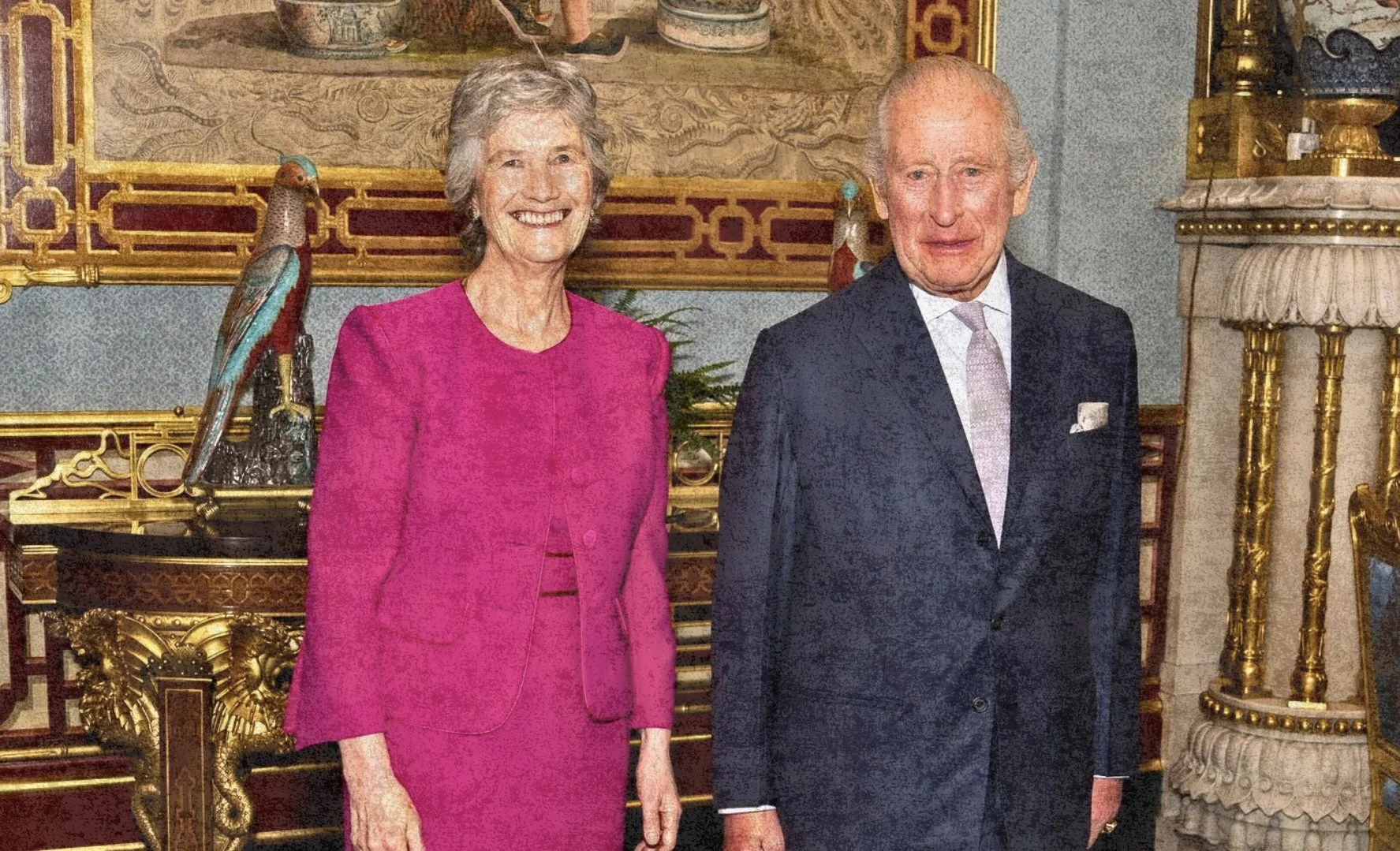
And now, fifteen years after this visit, Uachtarán Catherine Connolly, while on a state visit to Britain, extended an invitation to Charles Windsor to visit the Twenty Six Counties next year - which he so “graciously accepted” in the words of Connolly. This news came just a day before Charles Windsor arrived in Belfast on a three day tour of the occupied Six Counties. Visits by so-called British royalty to any part of Ireland should be totally and utterly rejected! Just like in 2011, Éirígí will be to the fore in opposing this normalisation of British imperialism if such a visit comes to pass in 2027.
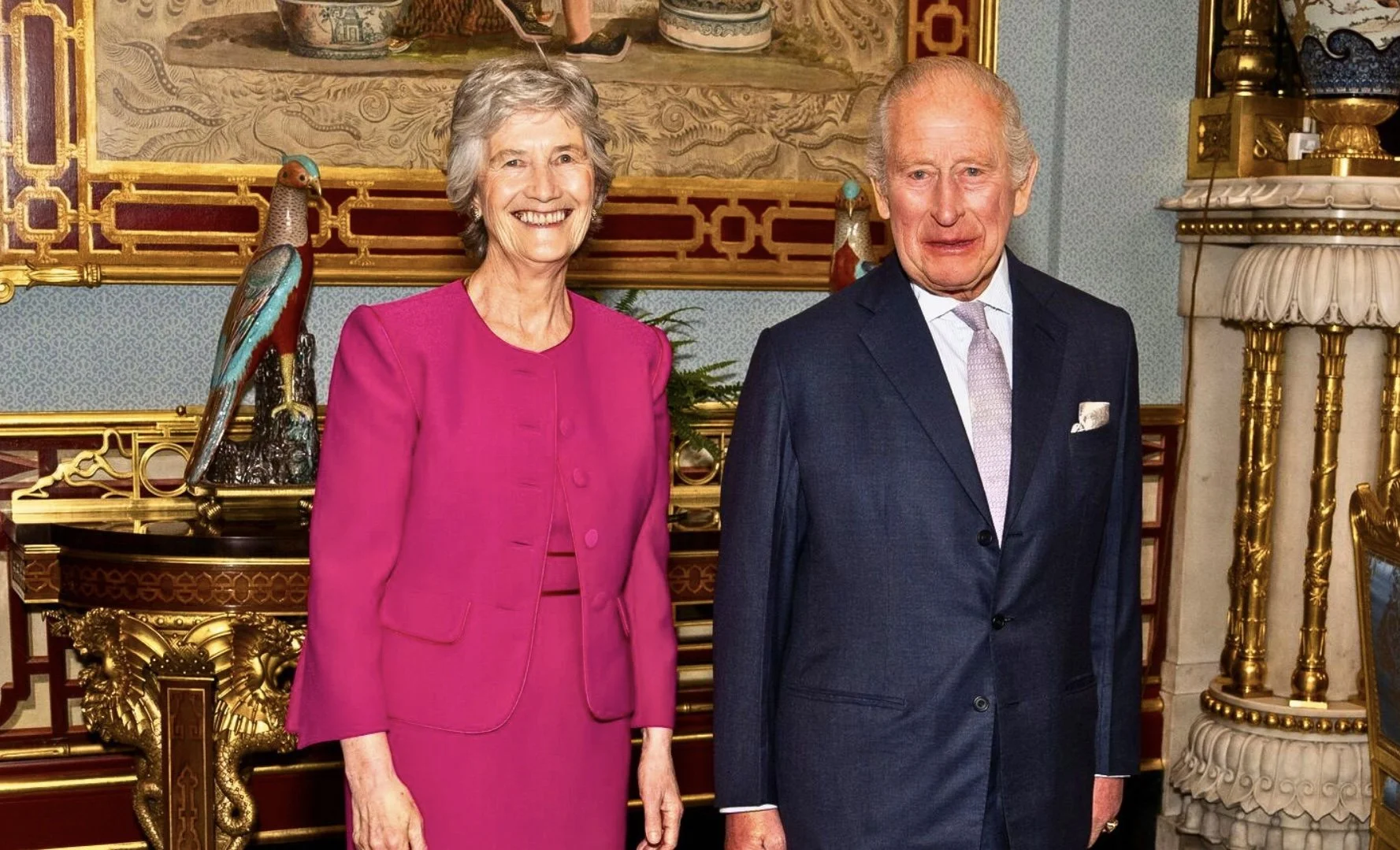
Uachtarán Catherine Connolly meeting with Charles Windsor.
Why Éirígí Opposes the ‘British Royalty’
Since its foundation Éirígí in 2006, has consistently opposed all visits to Ireland by members of the so-called British royalty. This opposition has seen the party distribute hundreds of thousands of leaflets, posters and stickers, as well as organising numerous public protests, such as those that took place during Elizabeth Windsor’s 2011 visit to Dublin. So why does Éirígí have such strong objections to the ‘British royalty’ visiting Ireland?
Contrary to the propaganda of the political establishment, republican opposition to the ‘British royalty’ is not based upon anti-English racism or religious sectarianism. It is instead based upon an unfaltering opposition to British imperialism in Ireland and elsewhere.
Irish apologists for the ‘British royalty’ often attempt to portray the Windsors as ‘an ordinary family who are just doing their job’. Nothing could be further from the truth! The ‘British royal family’ is in fact an institution of the British state and one with particularly strong links to the British military at that.
The head of the British ‘royal family’ is, as of birthright, the Commander-in-Chief of the British military and the British Head of State. Virtually all male, and many female, members of the British ‘royal family’ serve in the British military at some point in their lives. Indeed every single British gunman swears an oath of allegiance to the incumbent monarch before they are packed off to wars in foreign climes.
Ireland and the British ‘Royal Family’
Over the course of the last fifty-five years the British ‘royal family’ have provided never-ending support to the British army’s campaign of terror in the Six Counties. At the height of the conflict members of the ‘royal family’ regularly made ‘morale-boosting’ visits to troops stationed in occupied Ireland. Further moral support was offered by the British ‘royals’ when they routinely presented ceremonial badges to soldiers who had served in Ireland. Indeed, Elizabeth Windsor herself presented one such medal to war criminal Colonel Derek Wilford who oversaw the Bloody Sunday massacre in Derry in 1972.
In more recent times the British ‘royal family’ have played an important role in the British strategy of ‘normalisation’, whereby Britain’s occupation of the Six Counties is presented as being entirely ‘normal’. And what could be more normal than a member of the British ‘royal family’ visiting a part of the so-called United Kingdom of Ireland and Great Britain?
The 2011 Elizabeth Windsor state visit to the Twenty-Six Counties was also largely motivated by this strategy of normalisation, presenting an image of normality in relations between the Twenty-Six County and the British state. As such it was designed to re-enforce the permanency of partition and the British occupation of the Six Counties. By organising large-scale protests in opposition to this visit Éirígí succeeded in challenging the narrative of the political establishment by demonstrating to the world that many in Ireland refuse to accept the British occupation.
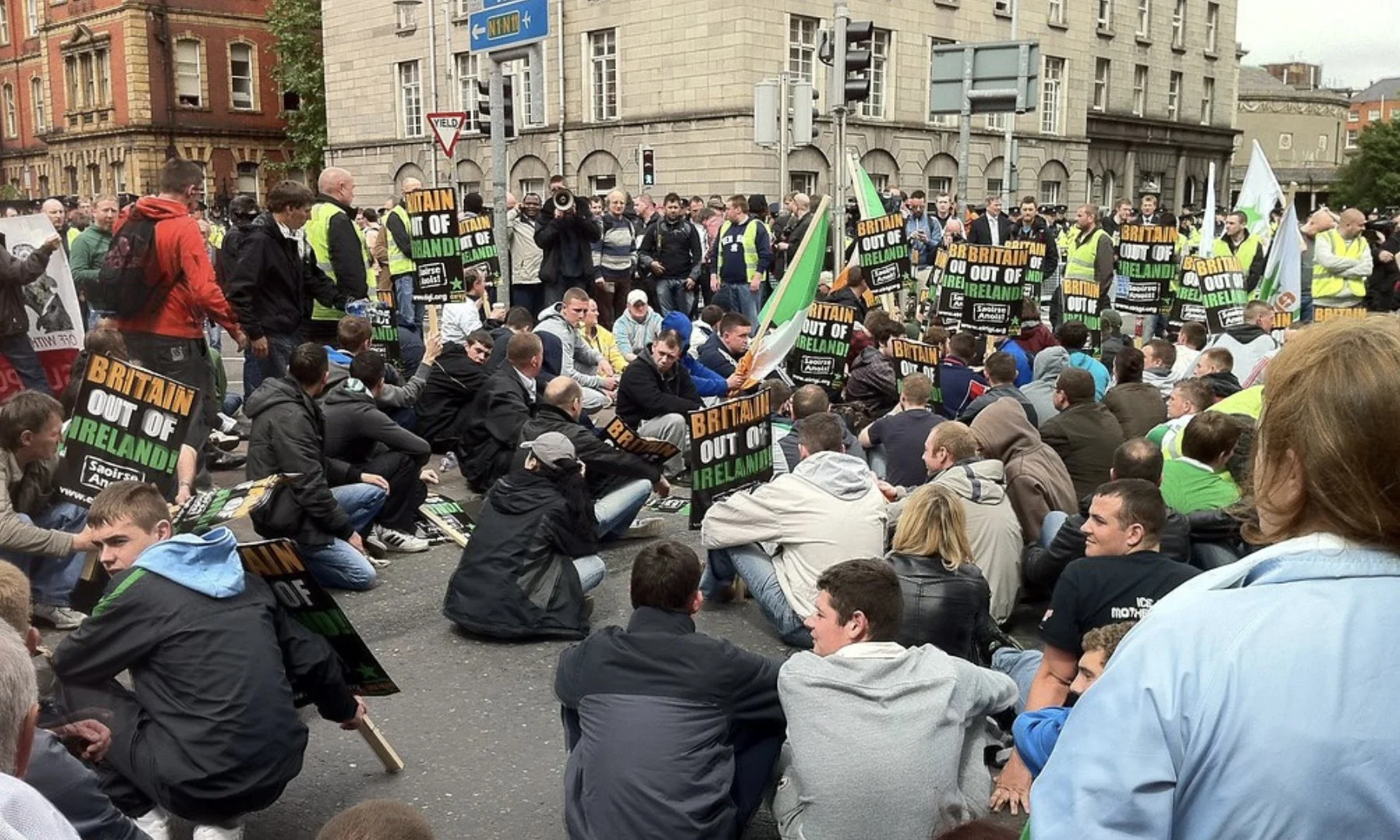
Hundreds joined with Éirígí on the streets of Dublin to oppose the Elizabeth Windsor visit in 2011.
International Solidarity
Éirígí’s opposition to the ‘British royalty’ is not solely based upon Britain’s imperial record in Ireland. As an internationalist party Éirígí realises that working people across the globe are united in their struggle for freedom and justice. By opposing British imperialism in Ireland we stand with those who oppose imperialism around the world.
The British ‘royal family’ are at the pinnacle of the British caste system, a system which is based upon sectarianism, inherited privilege and class. In opposing the British ‘royal family’ Éirígí stands with progressive elements in England as they struggle to consign the entire idea of royalty to the dustbin of history, a place where it rightly belongs.
By organising resistance to the normalisation of Britain’s occupation in Ireland Éirígí stands with those who suffer as a result of British imperialism in Wales, Scotland, Iraq, Afghanistan, Palestine and elsewhere.
Building Resistance to British Rule
Those who engineered the 2011 Elizabeth Windsor visit hoped that it would represent the final nail in the coffin of resistance to British rule in Ireland. They hoped that their massive security operation and relentless media bombardment would succeed in deterring and intimidating those who might otherwise have protested. In this they were sadly mistaken. Upwards of 500 people joined with Éirígí on the streets of Dublin to oppose the Elizabeth Windsor visit. Their disciplined, colourful and loud protests stood in stark contrast to the empty and sanitised streets that greeted Elizabeth Windsor wherever she went.
Éirígí is committed to building popular resistance to British imperialism in Ireland, and that includes opposing visits by ‘British royals’ to any and all parts of Ireland. Play your part in the fight for Irish freedom - Join Us!