
Orange Order Objecting To Bilingual Street Names In Portadown
An Orange Order lodge is formally objecting to bilingual street-names in Portadown, Co. Armagh. Given the organisation's history in Portadown, and elsewhere in the Six Counties, such a stance is unsurprising.
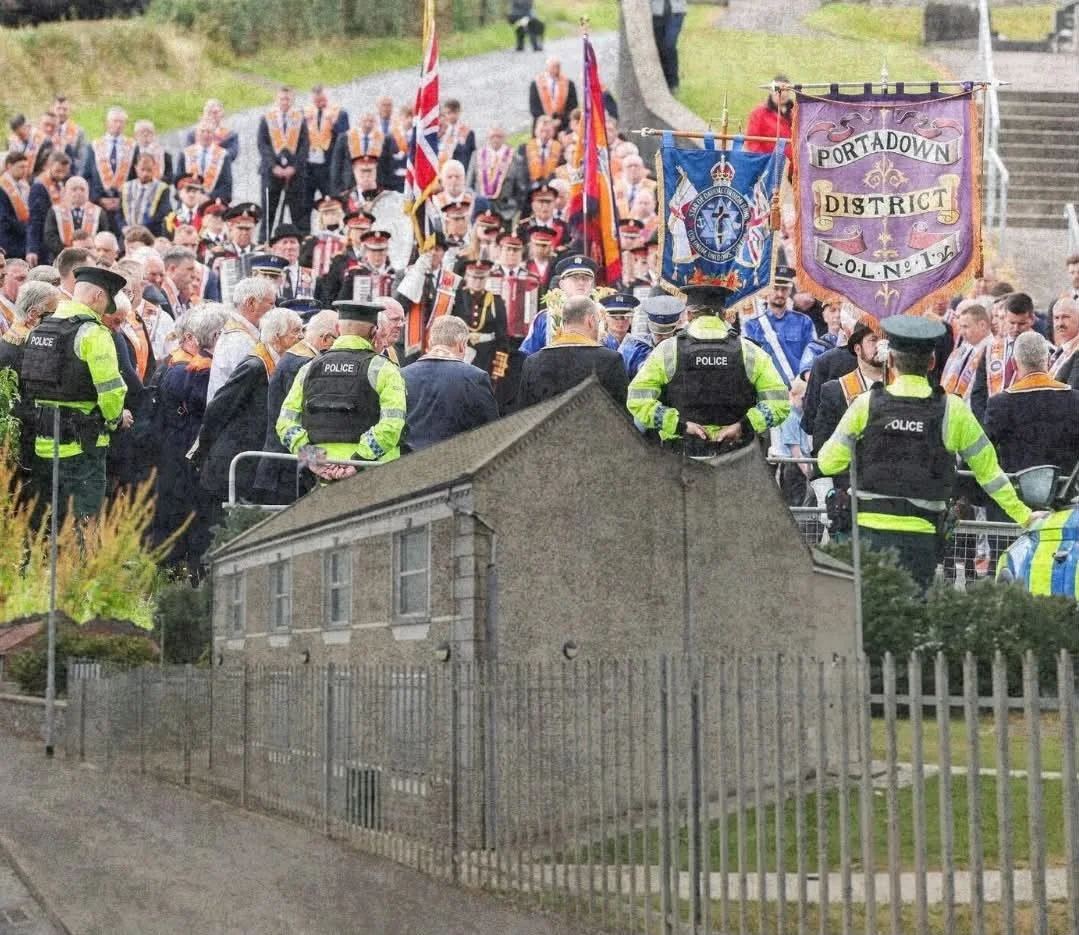
Until the mid-1980's, Corcrain Orange Hall was the starting point for Orange Order marches through the nationalist Obins Street area of Portadown - marches which saw local residents physically attacked and verbally abused, with the entire area placed under de facto martial law by upwards of 1,000 heavily armed men from the then RUC and British Army.
In the immediate aftermath of the murder of solicitor Rosemary Nelson by a unionist death squad on the 15th March 1999, attendees at an official Orange Order event gathered outside the Corcrain Orange hall to openly celebrate her murder.
A long history of violence, including murders, often accompanied Orange Order marches through the mainly nationalist Obins Street and Garvaghy Road areas of the town. Since the mid-1980's, in respect of Obins Street, and 1998 for the Garvaghy Road, the banning of such annual, sectarian parades, following years of protracted campaigning by residents, has led to the nationalist community being able to live in relative peace and normality.
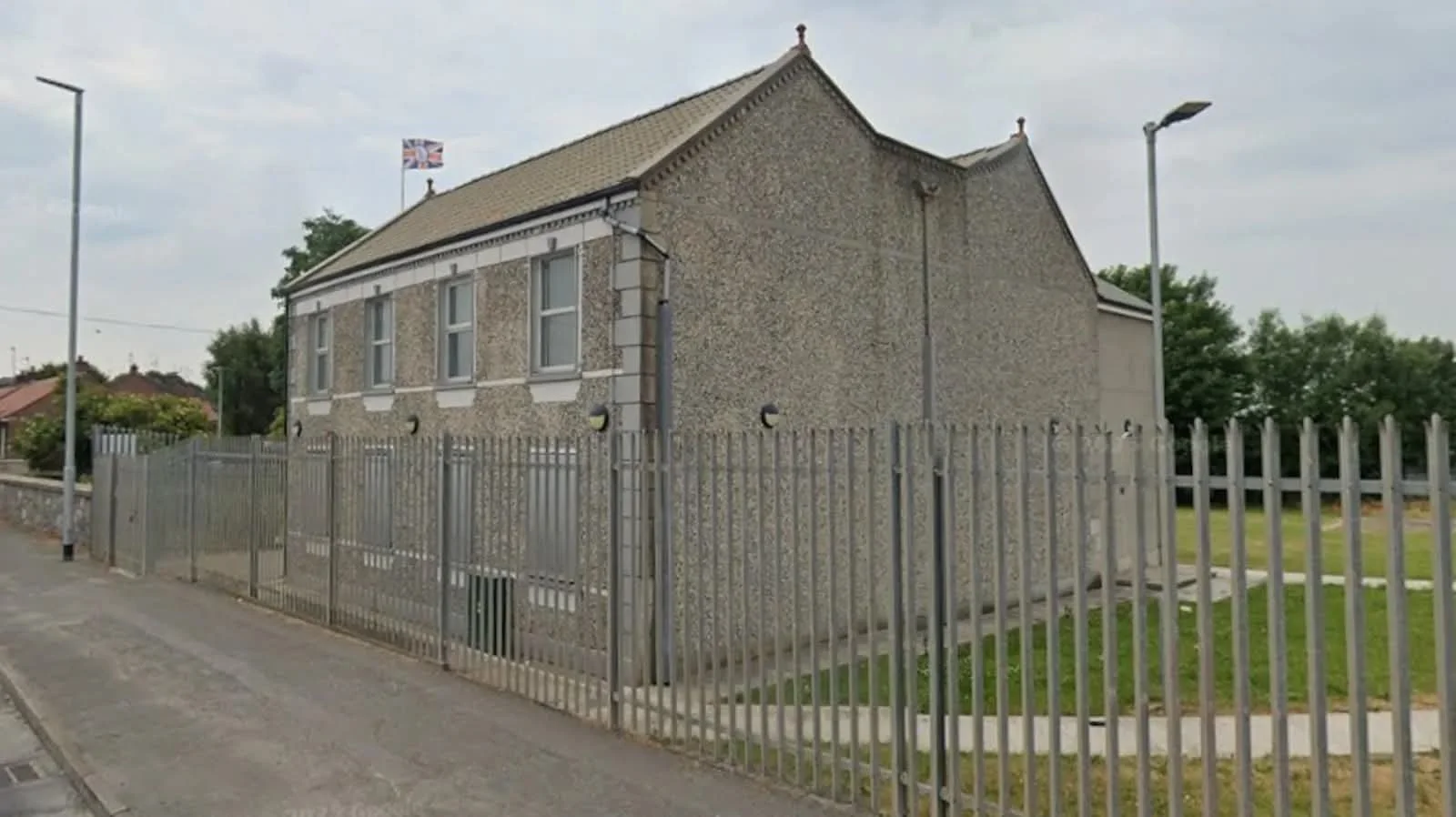
Corcrain Orange Hall in Portadown, Co. Armagh.
The growth of the Irish language in Portadown over the past three decades has witnessed the establishment of the locally based Naíscoil na Banna and Bunscoil Eoin Báiste, and more recently, an associated community-supported campaign for bilingual street signage.
Indeed, a successful legal campaign by a local resident forced the local authority (Armagh, Banbridge & Craigavon Council) to change its policy towards bilingual street signage. That successful legal case, led by a local resident, concluded earlier this year and cost the council almost £100,000.
Under current council policy, at least 33% of residents on a street must first sign a petition to trigger a survey. Dual-language signage can then be installed where two-thirds of those on the electoral register indicate support for the change in a subsequent survey of all residents aged 18 and over. That survey is conducted by the council.
Now the Orange Order is demanding that the council completely ignores its own policy in respect of two small housing estates, at Corcrain Gardens and Ballyoran Hill in Portadown, not far from the location of Corcrain Orange Hall.
House-to-surveys of all residents in both of the two areas, carried out by the local council, has shown that the majority of residents in each are clearly in favour of the bilingual street signs.
For those unaware, Corcrain and Ballyoran are the corrupted, anglicised versions of the original Gaelic place-names: Cor Crainn (the rounded hill of trees) and Baile an Fhuaráin (the townland of the well or spring).
Perhaps, the Orange Order, instead of objecting to a few words on a street sign 'as Gaeilge' might be better off seeking the inclusion of the correct English translations!