
Self-Styled Irish 'Patriots' Would Do Well To Remember Who They Are Trying To Ally With
As a number of so-called Irish patriots openly attempt to join forces with far-right unionist mobs in Belfast and other parts of the British occupied Six Counties, along with the extreme right in Britain itself, they should take some time to reflect on the links of these anti-Irish forces
These links do not emerge out-of-the-blue. Just over a century ago, at the time of partition, during the period from 1920-1922, organised state pogroms were co-ordinated by far-right unionist politicians against the gerrymandered minority population in the Six Counties. Almost five-hundred people, the vast majority of them Catholics, were killed, along with thousands being injured. In the Belfast shipyards and many major factories, Catholic workers were forced out of their places of work and from their homes.
In February, 1921, a bomb was thrown into a group of Catholic children playing in Weaver Street in North Belfast by unionists, killing four children and two women. Just weeks later, a Royal Ulster Constabulary (RUC) murder gang broke into the Belfast home of publican Owen McMahon. All the male members of the household were lined up in the front room, at which point the RUC opened fire on them. McMahon, four of his sons and his lodger were all killed, with two of his sons miraculously surviving.
In July, 1935, after several months of rising tensions, riots broke out during Orange Order parades that month. Over the next few weeks, 2,000 people, mainly Catholics, were forced from their homes in a pogrom. Catholics were driven out of their workplaces, along with trade unionists who sought to protect them, with several being murdered in sectarian attacks.
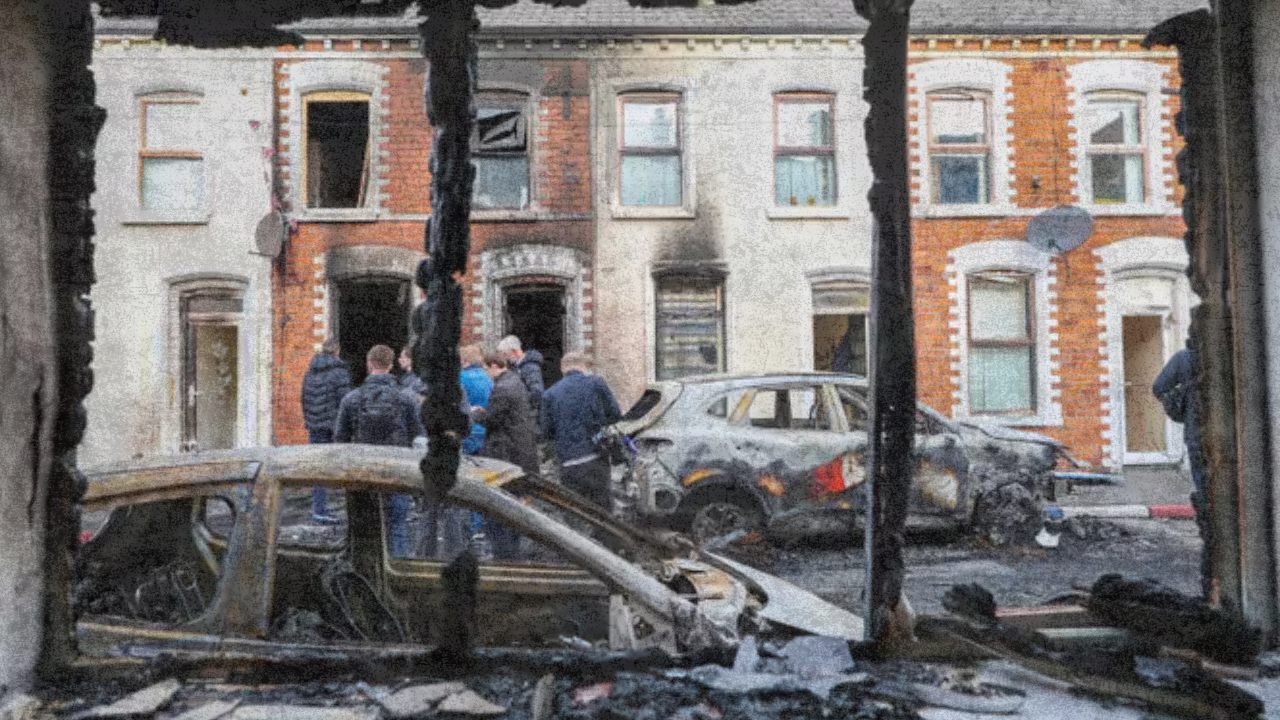
Fast forward to 1969 and the infamous pogroms which included the burning of Bombay Street in the Clonard area of Belfast by unionist mobs assisted by the RUC. More than a dozen people were killed in the first weeks of these events, with hundreds of homes being destroyed, making thousands of people refugees. These events changed the social and political geography of Belfast forever with the creation of ghettos and the erection of separation walls, most of which still remain in place today.
By the early 1970’s, unionist mobs extended their campaigns of terror to other towns in the Six Counties including Lurgan and Portadown in north Armagh where hundreds of Catholic families were forced from their homes. The northern part of County Armagh along with neighbouring eastern part of Tyrone soon became infamously known as “the Murder Triangle”. It was where a murder-gang of unionist paramilitaries, (the Glenanne gang), which included members of the RUC police-force and the Ulster Defence Regiment (a British Army regiment) carried out frequent and horrific multiple murders at will. Men, women, children and old age pensioners were among their victims.
That same murder gang also carried out the infamous Dublin and Monaghan bombings which killed 33 people and injured more than 300 others on Saturday, 17th May, 1974. The youngest of the victims was aged just four and a half months. Subsequent and similar unionist bombings would also target Belturbet in County Cavan and Dundalk in County Louth, claiming more innocent lives.
In the mid- and late 1990’s, those same unionist killer gangs provided “support” to the Orange Order in Portadown during the years of that organisation’s siege on the Garvaghy Road community. That “support” included the killings of innocent Catholics in Portadown and elsewhere, including the murders of the Quinn family and also that of Rosemary Nelson, the legal representative for the Garvaghy Road community.
These are the political allies which a certain minority of Irish people seek to align themselves with. Young people in particular should examine the records of those who would seek to draw them into their racist agenda. It must never be forgotten that racism and sectarianism are two sides of the same coin.